Family Court Transparency: Why Cameras in Courtrooms Matter

Robert Garza
January 24, 2026
4 min read
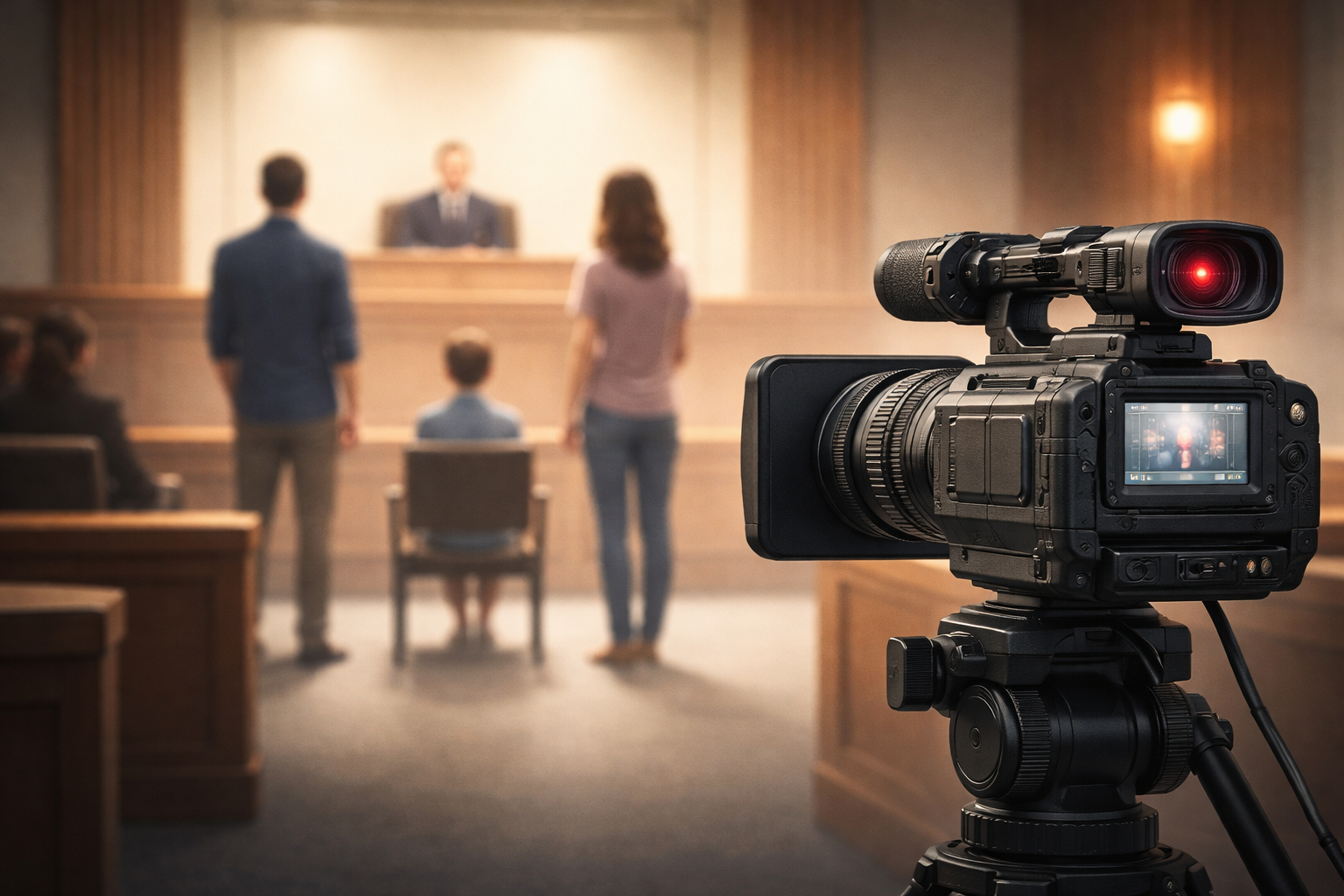
The Hidden Crisis in Family Courts
Every day, behind closed doors, family court judges make decisions that alter the lives of children and parents forever. Custody determinations, child support orders, restraining orders—these rulings shape families for generations. Yet unlike criminal courts, where public scrutiny is the norm, family courts operate largely in secret.
This lack of transparency creates fertile ground for abuse. Judges who never face public accountability can make arbitrary decisions. Parents without resources are steamrolled by the system. Constitutional rights are violated with no record to appeal.
It's time to bring family courts into the light.
Why Secrecy Fails Families
Proponents of closed family courts argue that secrecy protects children's privacy. But the reality is that secrecy primarily protects judicial misconduct.
The Privacy Myth
Children's identities can be protected through pseudonyms and redaction without hiding the entire proceeding. Criminal courts handle sensitive cases involving minors all the time while maintaining transparency. The difference is that family courts have historically resisted accountability.
What Happens in the Dark
Without public oversight, family courts have become breeding grounds for:
- Judicial bias: Judges who rule based on personal beliefs rather than evidence
- Procedural violations: Due process rights ignored when no one is watching
- Corruption: Financial relationships between judges, attorneys, and court-appointed professionals
- Retaliation: Parents who complain about misconduct face punishment in subsequent proceedings
The Case for Cameras
Recording family court proceedings would transform the system in several important ways:
1. Accountability
When judges know their words and actions are being recorded, they behave differently. The mere presence of cameras encourages adherence to proper procedure and discourages arbitrary decision-making.
2. Accurate Appeals
Currently, appellate courts rely on court transcripts that may be incomplete or inaccurate. Video recordings provide an objective record of what actually occurred, enabling meaningful appellate review.
3. Deterrence of False Allegations
False allegations of abuse are a common weapon in custody disputes. When accusers know their testimony is being recorded, they're less likely to fabricate or exaggerate claims.
4. Public Education
Recorded proceedings can be used (with appropriate redactions) to educate the public about how family courts actually operate. This transparency builds understanding and drives reform.
States Moving Toward Transparency
Progress is happening across the country:
- Texas has piloted programs allowing recording in family court proceedings
- Florida has strong sunshine laws that can be applied to family courts
- Several states are considering legislation mandating video recording of family court hearings
Opposition and How to Overcome It
"Cameras will harm children"
Response: Children's identities can be protected while still recording proceedings. The harm of hidden judicial abuse far outweighs privacy concerns that can be addressed through redaction.
"Parents will perform for the camera"
Response: If parents present their best behavior when being recorded, that's a feature, not a bug. Reduced conflict in the courtroom benefits everyone, especially children.
"Recording will make courts less efficient"
Response: Modern technology makes recording seamless and inexpensive. The slight administrative burden is vastly outweighed by the benefits of accountability.
Our Cameras in Courtrooms Bill
Robert Garza and Team has drafted comprehensive legislation requiring video recording of all family court proceedings. Key provisions include:
- Mandatory recording: All hearings must be recorded unless specific exemptions apply
- Access rights: Parties to the case have the right to obtain copies of recordings
- Preservation requirements: Recordings must be maintained for the duration of the child's minority
- Appellate use: Recordings are admissible as evidence in appeals and misconduct proceedings
How to Support Transparency
The fight for family court transparency is winnable, but we need your voice:
- Contact your legislators: Demand they support cameras in family courtrooms
- Share your experience: Personal stories illustrate why reform is necessary
- Support reform organizations: Help us continue the fight for judicial accountability
- Educate others: Spread the word about the hidden crisis in family courts
Transparency is the first step toward justice. When family courts operate in the light, judges are accountable, parents are protected, and children's best interests actually guide decisions.
Take Action Now
- View the bill: Read our Cameras in Courtrooms legislation
- Find your legislators: Use our Legislator Lookup tool
- Join the movement: Sign up for updates on family court reform
Related Reform Bills
Learn more about the legislation mentioned in this article.
View All Reform BillsRobert Garza
Director, Americans for Judicial Accountability
Robert Garza is a nationally recognized advocate for parental rights and family court reform. After surviving a 15-year custody battle with over 43 false CPS allegations, he became the architect of Texas SB 718 and has created 400+ reform bills now being used by advocates across all 50 states.